
All Day Slimming Tea Review:
Is it worth the price?
4.91/5

From 18,761+ Customer Reviews
All Day Slimming Tea has been showing up frequently in wellness conversations lately, especially among people who feel tired of aggressive detoxes, extreme diets, or stimulant-heavy supplements. Instead of positioning itself as a rapid weight-loss solution, the product frames itself as a daily ritual built around digestion, energy balance, and consistency.
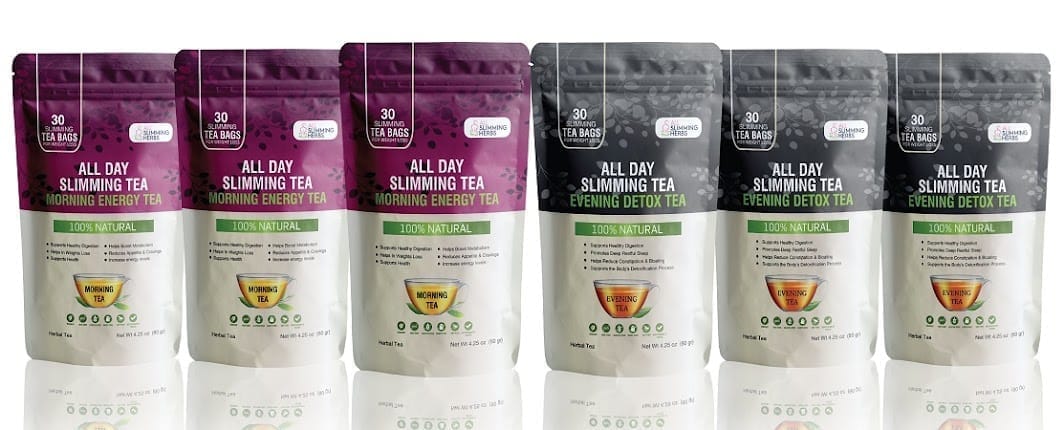
At its core, All Day Slimming Tea is not a medication or fat-burning product. It is a two-tea system designed to be used at different times of the day. One blend is taken in the morning to support alertness and digestive readiness, while the second is taken in the evening to encourage digestive regularity and comfort.
Many people who try the tea are not looking for dramatic changes. What they tend to notice first are subtler shifts: feeling less heavy after meals, drinking more fluids throughout the day, and experiencing steadier energy in the morning compared to coffee or sugary drinks. Some also describe the evening tea as a signal that the day is “winding down,” which naturally reduces late-night snacking.
It’s important to be clear about what this tea does not do. It does not override poor eating habits, it does not replace medical care, and it does not deliver instant weight loss. Anyone approaching it with expectations of rapid fat loss is likely to be disappointed.
One ingredient that deserves special attention is senna, which is included in the evening blend. Senna is a well-known herbal laxative, and while it can support regularity for some people, it is not suitable for everyone. Sensitivity varies, and responsible use matters. Starting with shorter steep times and paying attention to hydration can make a significant difference.
Most negative experiences reported by users tend to come from mismatched expectations or improper use rather than the tea itself. As with many wellness products, it works best when treated as a supportive habit rather than a solution.
In the end, All Day Slimming Tea fits best for people who value small, repeatable changes. It is not a dramatic transformation tool. It is, as the name suggests, a small shift. And for the right person, that can be enough.
All Day Slimming Tea Review: A Small Daily Ritual, Not a Weight-Loss Shortcut
In recent years, the wellness space has become increasingly loud. Every week seems to bring a new detox, a faster reset, or a stronger promise to “fix” the body in days. For many people, especially those who have already tried dieting, supplements, or extreme cleanses, that noise creates more confusion than clarity.
All Day Slimming Tea has been appearing more often in these conversations, not because it promises dramatic transformations, but because it positions itself differently. Instead of focusing on rapid weight loss, it presents itself as a daily tea ritual built around digestion, energy balance, and consistency. That distinction alone is enough to make some people curious, and others skeptical.
This review is written for readers who fall somewhere in the middle. Not those chasing overnight results, and not those dismissing every wellness product outright. But for people who are interested in small, manageable changes and want to understand what a product actually does before deciding whether it fits their lifestyle.
Rather than repeating marketing claims or dramatic success stories, this article looks at All Day Slimming Tea in a grounded way. What it is, what it isn’t, how people tend to use it, and where expectations often go wrong. Think of this not as a recommendation, but as context, so you can decide whether this small daily shift is meaningful for you or simply not the right fit.
Why People Are Talking About All Day Slimming Tea
The growing attention around All Day Slimming Tea says as much about changing wellness habits as it does about the product itself. Over the past few years, many people have grown tired of approaches that feel extreme or unsustainable. Juice cleanses, aggressive detox programs, stimulant-heavy supplements, and rigid diet rules often create a short burst of motivation followed by burnout. As a result, interest has been shifting toward routines that feel easier to live with day after day.
Tea fits naturally into that shift. Unlike pills or powders, drinking tea is familiar, slow, and ritual-based. It doesn’t demand a dramatic lifestyle overhaul, and it doesn’t frame wellness as punishment. For many people, that alone lowers the barrier to trying something new. A cup in the morning, another in the evening, feels more approachable than a strict program or complicated protocol.
Another reason this tea comes up frequently is how it’s framed. Instead of focusing on dramatic outcomes, conversations around it tend to center on digestion, bloating, and daily energy. These are common, everyday concerns that many people experience but rarely find simple solutions for. When a product speaks to discomfort rather than transformation, it often attracts a more cautious, research-minded audience.
There is also a broader cultural shift at play. Wellness content has moved away from “before and after” extremes and toward habit-building and awareness. People want to understand how something fits into their day, not just what it promises to change. All Day Slimming Tea benefits from this context. It’s discussed less as a breakthrough and more as a potential addition to an existing routine.
In that sense, the conversation around this tea reflects a wider desire for moderation. Not doing more, but doing something small, consistently, and with clearer expectations.
What All Day Slimming Tea Actually Is (Not What Ads Promise)
One of the biggest reasons products like All Day Slimming Tea generate mixed reactions is expectation. Much of the confusion comes from how wellness products are marketed online, where language often blurs the line between support and solution. To understand this tea clearly, it helps to strip away those assumptions and look at what it actually is.
All Day Slimming Tea is not a weight-loss drug, a fat-burner, or a medical treatment. It is a two-blend herbal tea system designed to be used at specific times of the day. Its focus is on supporting everyday processes such as digestion, hydration, and energy steadiness, not on forcing the body into rapid change. When people approach it as a shortcut, disappointment is almost guaranteed.
The product is structured around routine rather than intensity. The idea is not to overwhelm the body, but to work alongside daily habits that already exist. A morning tea meant to replace or reduce reliance on coffee or sugary drinks, and an evening tea intended to fit naturally after dinner. In this sense, the tea functions more like a behavioral anchor than a standalone intervention.
This distinction matters because many benefits people associate with the tea are indirect. Drinking it often increases overall fluid intake. Replacing high-sugar or high-caffeine beverages can change how energy feels throughout the day. Having a set evening ritual can signal the end of eating for the night. None of these effects require dramatic ingredients, and none of them bypass the fundamentals of health.
When framed honestly, All Day Slimming Tea sits in the category of lifestyle support, not transformation. It may complement healthier patterns, but it does not create them on its own. Understanding this upfront helps separate genuine use cases from marketing noise, and allows people to evaluate the tea based on fit rather than promise.
The Two-Tea System Explained (Morning vs Evening)
What sets All Day Slimming Tea apart from many other detox-style products is not a single ingredient or bold claim, but its structure. Instead of relying on one blend meant to do everything at once, the system is divided into two teas, each intended for a different time of day and a different purpose. This design reflects a more practical understanding of how daily routines actually work.
The Morning Tea: Energy Without Urgency
The morning blend is typically consumed shortly after waking or before breakfast. Its role is not to stimulate aggressively, but to support a smoother transition into the day. Ingredients commonly associated with mild alertness and digestive readiness are used, such as green tea, oolong tea, and ginseng. These are familiar botanicals that many people already consume in some form.
For some users, the most noticeable change is not an energy surge, but a reduction in extremes. Compared to coffee or energy drinks, the morning tea is often described as providing a more even sense of wakefulness, without the jittery edge or mid-morning crash. This makes it easier for people to stay consistent, especially if they are trying to cut back on caffeine rather than eliminate it entirely.
Another subtle effect of the morning tea is behavioral. Because it replaces a habitual drink, it can influence what follows. Starting the day with a warm beverage can encourage hydration, slow down rushed mornings, and create a moment of awareness before eating. These shifts are small, but over time they can change how the rest of the day unfolds.
The Evening Tea: Digestive Support and Closure
The evening blend serves a different function. Taken after dinner, it is intended to support digestion and regularity rather than energy. This is where the formula includes senna, an herbal ingredient traditionally used to encourage bowel movements, along with other herbs like peppermint, fennel, and cinnamon that are commonly associated with digestive comfort.
Because of this, the evening tea is not something to approach casually. Sensitivity to senna varies, and this blend requires a more mindful introduction. Many people start with shorter steep times and pay close attention to hydration, especially in the first few days. When used gently, the tea is often described as helping people feel lighter and less bloated the next morning.
Beyond its physical role, the evening tea also acts as a signal. Drinking it after dinner can mark a clear end to eating for the day, reducing late-night snacking and helping the body settle into rest. For some, this sense of closure is as valuable as any digestive effect.
Together, the two teas form a simple rhythm. One supports alertness and readiness during the day, the other supports winding down and digestive comfort at night. Rather than forcing change, the system relies on timing and repetition, which helps explain why people who use it consistently tend to describe it as a routine rather than a remedy.
What People Commonly Notice (Based on User Patterns, Not Promises)
When people share their experiences with All Day Slimming Tea, the most consistent themes are not dramatic transformations, but small, repeatable changes that tend to show up over time. These patterns appear less like instant results and more like gradual adjustments that come from using the tea as part of a daily routine rather than as a one-off experiment.
One of the earliest things many users mention is a change in how their digestion feels, particularly in the evening and the following morning. After a few days of consistent use, some people describe feeling less heavy or uncomfortable after meals. This is often paired with greater awareness of hydration, as drinking the tea naturally encourages more fluid intake throughout the day. For people who previously drank very little water, this alone can make a noticeable difference.
Energy-related observations tend to be more subtle. Instead of feeling “boosted,” users often describe their mornings as more even. Replacing coffee or sugary drinks with the morning tea can reduce spikes and crashes, making energy feel steadier rather than higher. Over time, this steadiness can influence appetite awareness and focus, though these effects vary widely from person to person.
Another pattern that comes up frequently is behavioral rather than physical. Having a set morning and evening ritual creates structure. The evening tea, in particular, often becomes a signal that eating is finished for the day. This doesn’t require willpower or restriction, but it can naturally reduce late-night snacking, which many people struggle with.
It’s also worth noting what users tend not to report. Sudden weight loss, dramatic body changes, or overnight shifts are rarely mentioned by people who stick with the tea long term. Instead, those who view it as a supportive habit are more likely to notice gradual improvements in comfort and consistency.
These patterns help explain why reactions to the tea vary so widely. When expectations align with its actual role, experiences tend to be neutral to positive. When expectations are inflated, disappointment is more likely.
What This Tea Does Not Do
Clarifying what All Day Slimming Tea does not do is just as important as explaining what it does. Many frustrations around wellness products come from assumptions rather than from the product itself, and setting realistic boundaries helps prevent that cycle.
First, this tea does not cause weight loss on its own. It does not override calorie intake, sleep patterns, stress levels, or underlying health conditions. Any changes people notice tend to be indirect, coming from improved routine, hydration, or digestive comfort rather than from a forced metabolic effect.
Second, it does not “detox” the body in the way that term is often used online. The human body already has built-in systems for detoxification, primarily the liver and kidneys. While herbal teas may support digestion or elimination, they do not remove toxins in a medical sense, and this product should not be viewed as a cleanse that resets the body.
All Day Slimming Tea is also not a replacement for medical care or professional advice. It is not intended to treat digestive disorders, hormonal imbalances, or chronic conditions. People dealing with ongoing health issues should not rely on a tea, or any supplement, as a primary solution.
Finally, it is not a product that works through intensity. Using more, steeping longer, or trying to accelerate effects does not lead to better outcomes and often leads to discomfort instead. The tea is designed to be used gently and consistently, not aggressively.
Understanding these limitations doesn’t make the product less useful. It simply places it in the right category, as a supportive daily habit rather than a shortcut or cure.
About Safety, Senna, and Who Should Be Careful
Safety is an area where detox-style products often create confusion, and All Day Slimming Tea is no exception. Most concerns around this tea are not related to contamination or hidden ingredients, but to how one specific component is used and understood. That component is senna, which is included in the evening blend.
Senna is a well-known herbal laxative that has been used traditionally to encourage bowel movements. When used occasionally and in appropriate amounts, it can help support regularity for some people. However, sensitivity to senna varies widely. For individuals who are not accustomed to stimulant laxatives, using too much or steeping the tea too long can lead to cramping, urgency, or loose stools. These effects are not unusual, but they do require attention.
Because of this, the evening tea is best approached gradually. Many people start with shorter steep times and observe how their body responds before increasing intensity. Hydration also plays an important role. Drinking enough water throughout the day and in the evening can reduce discomfort and support more predictable digestion. Treating the tea as a gentle support rather than a corrective tool makes a noticeable difference.
It’s also important to recognize who should be cautious or avoid this type of product altogether. Individuals with chronic digestive conditions, a history of laxative dependence, or ongoing gastrointestinal sensitivity may not be good candidates for a daily senna-containing tea. Pregnant or nursing individuals, or anyone taking medications that affect digestion or electrolyte balance, should consult a healthcare professional before use.
When used responsibly, many people report no significant side effects. Still, this is not a “more is better” product. Listening to the body, adjusting use when needed, and respecting personal tolerance are essential. Framed this way, safety becomes less about fear and more about informed, intentional use.
Where Most Complaints Come From (And Why)
Complaints about All Day Slimming Tea do exist, but they tend to follow a few predictable patterns. Understanding where dissatisfaction usually comes from helps separate genuine product issues from mismatched expectations or usage errors.
One common source of frustration is expectation mismatch. Some people approach the tea expecting rapid or visible weight loss within days. When that doesn’t happen, disappointment sets in quickly. Because the tea is designed to support digestion and routine rather than drive dramatic change, it often underdelivers for those looking for immediate results. This isn’t a failure of the product so much as a misunderstanding of its role.
Another frequent complaint relates to how the evening tea is used. As mentioned earlier, senna requires a measured approach. Over-steeping the tea, increasing frequency too quickly, or neglecting hydration can lead to digestive discomfort. In many cases, users who adjust steep time or reduce use report that these issues ease or disappear, suggesting that the problem lies in usage rather than formulation.
There are also complaints tied to sourcing and logistics. Some negative experiences stem from purchasing through unofficial channels, where shipping delays, inconsistent packaging, or refund confusion can occur. When a product passes through multiple sellers, accountability becomes less clear, which naturally increases frustration for the buyer.
Finally, a small portion of complaints reflect simple incompatibility. Not every routine suits every person. Taste preferences, digestive sensitivity, or lifestyle factors can make the tea a poor fit for some users, even when it is used correctly. In those cases, dissatisfaction is often about personal mismatch rather than product quality.
Taken together, these patterns suggest that most complaints are situational. Clear expectations, careful use, and informed purchasing reduce the likelihood of a negative experience, while acknowledging that no wellness product works equally well for everyone.
Who This Might Be Right For
All Day Slimming Tea tends to resonate most with people who are looking for subtle support rather than dramatic change. It is generally a better fit for individuals who are already thinking about their habits and want something that complements, rather than replaces, a healthy routine.
This tea may be a good option for people who frequently feel bloated or uncomfortable after meals and are interested in a gentler, plant-based approach to digestive support. It also appeals to those who notice that their energy fluctuates throughout the day and are open to replacing or reducing coffee, soda, or other stimulating drinks with something milder.
Another group that often responds well to this type of product is people who value structure but struggle with consistency. The simple act of preparing a tea in the morning and evening creates a predictable rhythm. For some, that rhythm makes it easier to stay mindful about eating, hydration, and winding down at night without relying on strict rules or self-control.
All Day Slimming Tea may also suit individuals who are skeptical of extreme wellness trends but still curious about small, practical adjustments. Those who view health as a series of incremental choices, rather than a single breakthrough, are more likely to appreciate what this tea offers.
In short, it fits best for people who are comfortable with gradual change, realistic about outcomes, and willing to treat the tea as a supportive habit rather than a solution in itself.
Who Should Probably Skip It
Just as important as knowing who this tea may be right for is understanding who it likely isn’t. All Day Slimming Tea is not designed to meet every need, and for some people, it may add more frustration than value.
Those seeking rapid or significant weight loss are unlikely to be satisfied. The tea does not produce dramatic changes on the scale, nor is it meant to. If your primary goal is fast, visible results, especially within days or a couple of weeks, this product will probably feel underwhelming.
People with sensitive digestion should also be cautious. Because the evening blend contains senna, anyone with chronic gastrointestinal conditions, frequent digestive discomfort, or a history of laxative use may find this tea too stimulating, even when used carefully. In these cases, a gentler, non-stimulant approach to digestive support may be more appropriate.
It may also not be a good fit for individuals who dislike herbal teas or find it difficult to stick to simple routines. Taste, timing, and consistency all matter here. If preparing and drinking tea twice a day feels burdensome rather than calming, the habit is unlikely to last long enough to be useful.
Finally, those who prefer clear, measurable interventions may find the effects too subtle. This tea works through routine and awareness rather than through obvious or immediate feedback. For people who need strong signals to stay motivated, that subtlety can feel like a drawback rather than a benefit.
Recognizing these limitations upfront helps prevent unnecessary disappointment and allows people to choose a path that better aligns with their expectations and needs.
Final Thoughts: A Little Shift, Not a Big Promise
All Day Slimming Tea is best understood when it’s taken out of the spotlight of big claims and placed back into the context of everyday life. It is not a shortcut, a reset button, or a solution that works independently of everything else. Instead, it’s a small, repeatable action that can support comfort, awareness, and consistency when used with realistic expectations.
For some people, that kind of shift is enough. A steadier morning, a clearer end to the day, fewer moments of digestive discomfort, and a routine that gently reinforces healthier choices can add up over time. None of these changes are dramatic on their own, but together they can make daily habits feel more manageable.
For others, the tea may feel too subtle or simply unnecessary. That doesn’t make it ineffective; it just means it doesn’t match every lifestyle or goal. Wellness tools are highly individual, and what fits one person’s rhythm may not fit another’s.
If there is one takeaway worth emphasizing, it’s this: the value of All Day Slimming Tea depends far more on how it is used and why it is chosen than on the tea itself. Approached as a supportive ritual, it can play a meaningful role in a broader routine. Approached as a promise of transformation, it will almost certainly disappoint.
In that sense, All Day Slimming Tea aligns well with the idea behind The Little Shift. Not changing everything at once, but paying attention to the small, intentional choices that shape how we feel day to day.
4.91/5
From 18,761+ Customer Reviews
Disclaimers:
The information provided about the All Day Slimming Tea supplement is intended solely for educational and informational purposes. It is not a substitute for professional medical advice, diagnosis, or treatment. All Day Slimming Tea is a dietary supplement, not a prescription medication. Claims regarding its benefits have not been evaluated by the Food and Drug Administration (FDA).
Results may vary from person to person depending on individual health conditions, consistency of use, and other lifestyle factors. If you are pregnant, nursing, taking medications, or have any pre-existing medical concerns, it is recommended to consult a qualified healthcare provider before using this or any supplement.
This content may include affiliate links. If you choose to purchase All Day Slimming Tea through these links, we may earn a small commission at no additional cost to you. Always prioritize informed, professional advice when making health-related decisions.
Create Your Free Account